


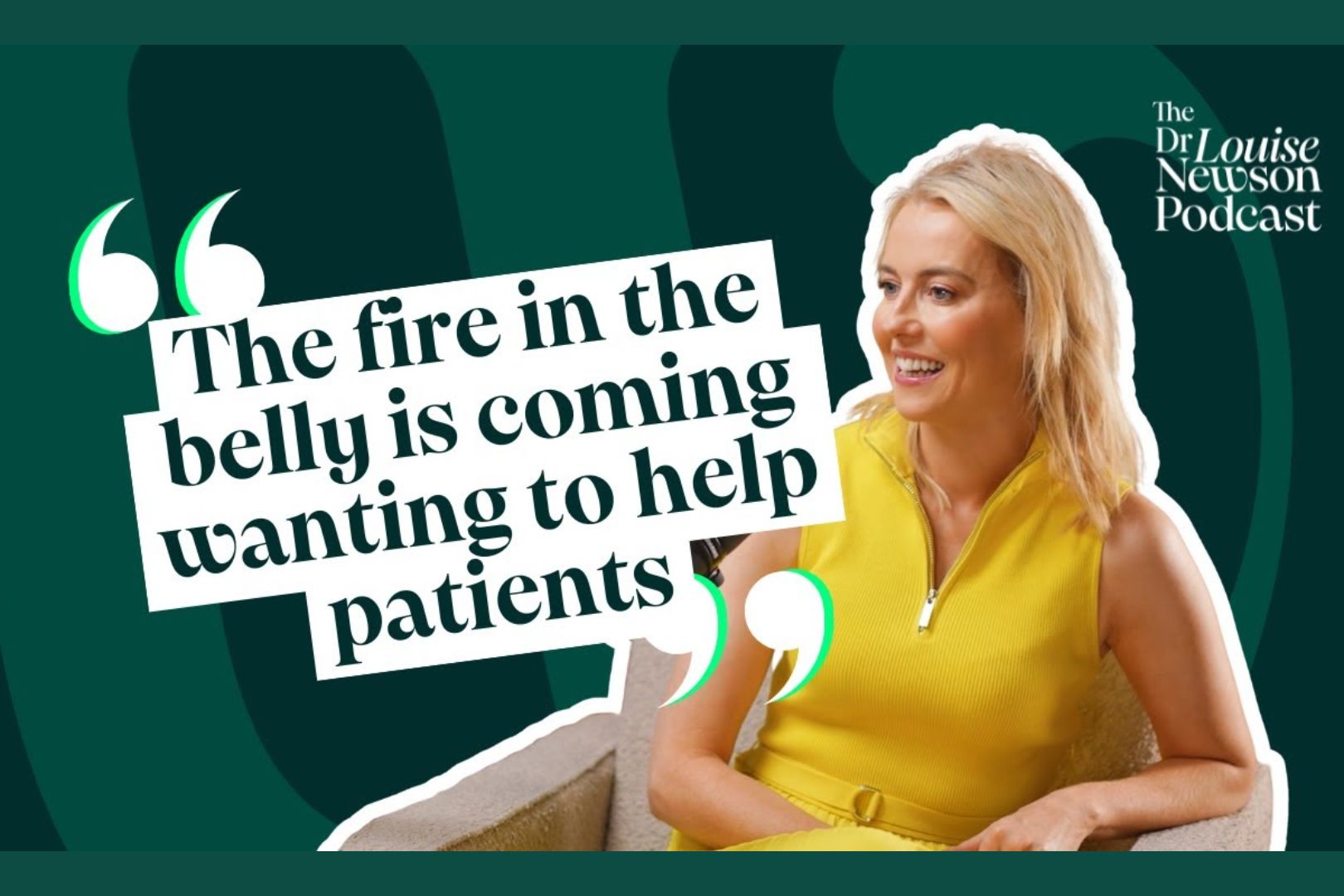
In a recent episode of the Dr. Louise Newson podcast, our Medical Director, Dr. Fionnuala Vernon, shared her expert perspective on the evolving landscape of menopause care in Ireland.
She joined Dr. Newson, a leading GP and hormone specialist known for “kickstarting the menopause revolution,” to discuss why a holistic and patient-centered approach is crucial. Their conversation highlighted the importance of education for both doctors and patients, as well as talking about the significant changes taking place in women’s healthcare and menopause awareness in Ireland.
The importance of a holistic approach
Navigating menopause can be a challenging journey, not just for the women experiencing it, but also for the doctors who treat them. The symptoms are often complex and non-linear, making diagnosis and treatment a nuanced process. Unlike conditions such as diabetes, where a blood test provides a clear-cut answer, menopause requires a more holistic and compassionate approach.
On the podcast, Dr. Vernon emphasised the need for doctors to take a thorough patient history, including social and family history.
She recounted seeing adult children who, with new awareness of menopause, were now re-evaluating their difficult relationships with their mothers. This realisation helped them “join the dots” and understand that their mother’s behavior may have been hormone-related, rather than a personality clash.
“We didn’t know the symptoms, especially the mental health symptoms [but] they are probably the most prevalent and the most distressing symptoms that people come to us with. The number of patients I see now who, with the education that they’re getting [on the Dr Louise Newson Podcast] and other platforms…and they are now joining the dots.”
Dr Vernon explained how she saw children of the women who were suffering, and who didn’t have a great relationship with their mothers “and now when they’re looking back saying, “Actually, there maybe was a different reason.”
“When I ask about the older siblings, what was your older siblings’ relationship with your mum? Oh, it was great. They don’t remember difficult times. They remember great times.
So it’s tying that all together, looking back over history.
As GPs, we are interested. We want to know, we’re interested in your social history or family history.”
Raising awareness of menopausal symptoms
Increased public awareness, driven by media and platforms like the Dr. Newson podcast, Dr Vernon explained, is great because it is leading to more women seeking help.
“When we raise awareness, we’ve seen the same level of interest with things like prostate cancer, when celebrities or when people who are very well known in the media develop prostate cancer, and then we’ll see a surge in requests for PSA testing. And so it’s inevitable that if we’re raising awareness of menopausal symptoms and the issues we have with menopause that we’re going to see more menopausal women.”
But as trained GPs, Dr Vernon explained how important it is to take a proper history, as not everything could be related to menopause.
“We’re very mindful of the fact that not everything is hormone related, but it’s fuel,” says Dr Vernon. “I’d sometimes explain it to kids, I’d say, like, if your mom didn’t, if your mom didn’t put petrol in the car, it wouldn’t go very well, would it?”
If your thyroid is underperforming we prescribe it’s thyroxine, for men it’s testosterone, says Dr Vernon. It should be the same for women. Women should be able to speak openly about hormones, whether with their doctors, friends, or even in the workplace, fostering a safe environment for these conversations.
From a doctor-centred approach to a patient-centred one
Dr. Vernon highlighted a crucial shift from a doctor-centered to a patient-centered approach in healthcare. This change has empowered women to become active participants in their own treatment decisions. Dr Vernon also sees a move towards a more collaborative, multidisciplinary environment among healthcare professionals, who are now more open to supporting each other.
“We’ve had a very doctor centred approach to care for years, and now we’re moving into this very patient centred approach, where we’re asking patients to become involved in their decision making.”
Changing attitudes to menopause in Ireland
In Ireland, with revelations of the atrocities in the Mother & Baby homes, Dr Vernon believes that “women are now using the momentum from that movement and all of their emotions associated with what has gone before,” to bring about change.
“Women are very tuned in, we’re great talkers,” says Dr Vernon. “We have these conversations in the tea room and on the football sidelines. And we’re very open about our symptoms.”
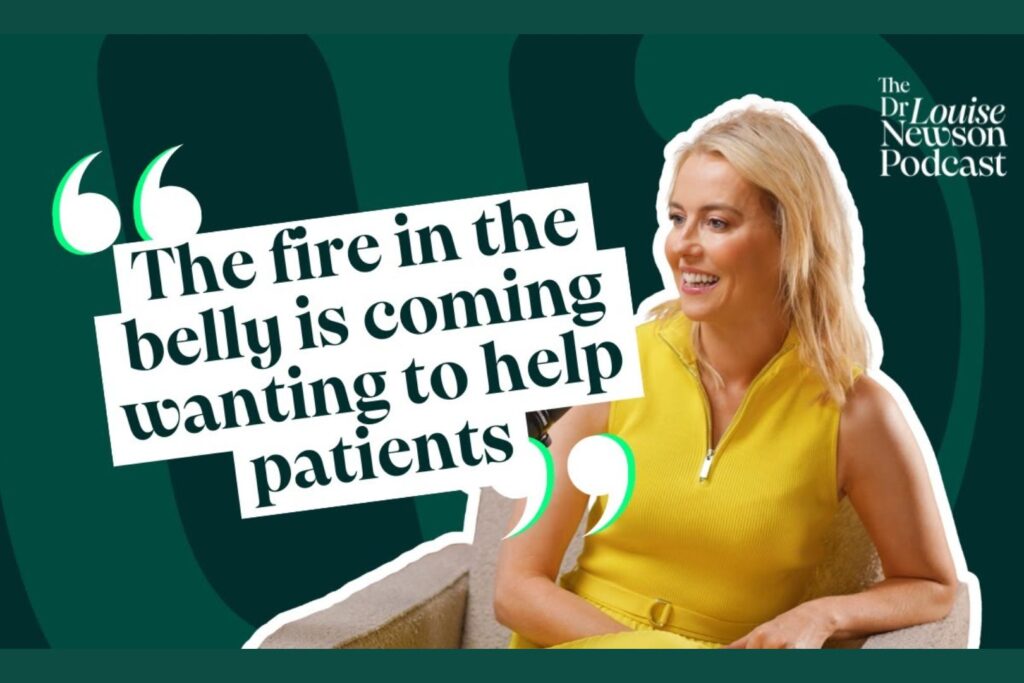
In the Menopause Clinics at Blackwater, Dr Vernon sees a regular stream of women.
“Sometimes the stories patients tell me…are very distressing and some of them are absolutely hilarious,” but she tries to tie those symptoms together and understand the whole picture.
“It’s great to just create this really safe environment where women can continue to do that. Even in the workplace, I would often say to patients, you know, don’t be afraid. Don’t be afraid to mention hormones.”
“We’re on the crest of a wave in Ireland at the minute. We’ve had a very poor relationship with women’s health, but we’ve lots of great women in politics, both north and south, and that makes a massive difference.”
In June this year, HRT became free to everyone in Ireland and testosterone is also now available which Dr Vernon sees as a great win.
Dr Vernon also mentioned seeing an increase in the prescribing of HRT, as more women come forward, aware of what their symptoms mean.
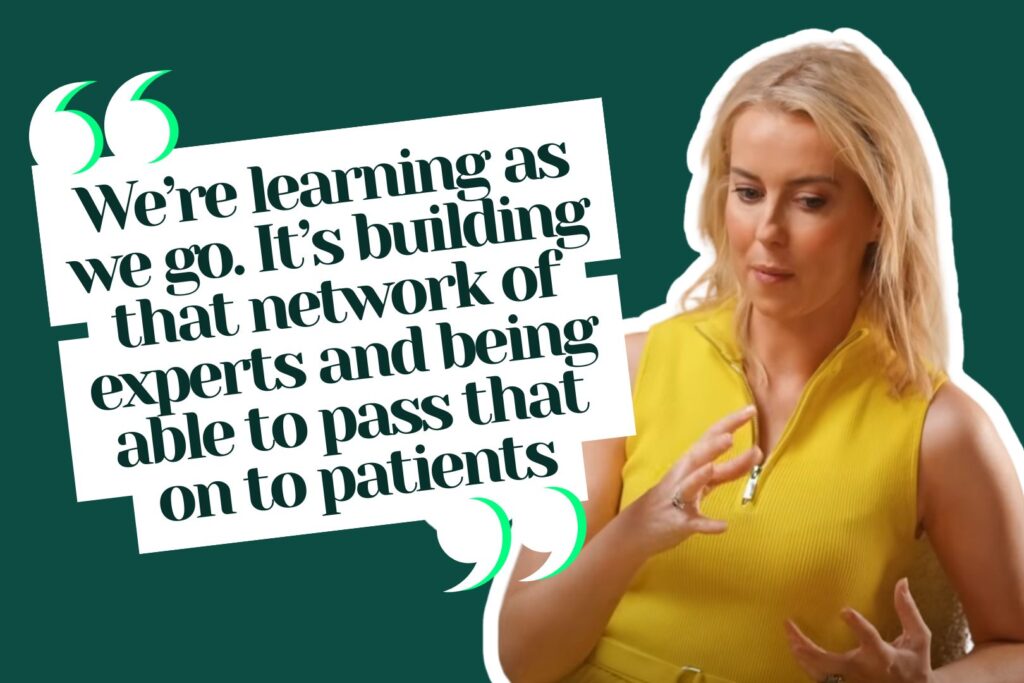
“In our clinic, we have two physical clinics and an online clinic. And what I would do with patients is because they’re able to get their prescriptions free, I’ll ask their GP, so it’ll be a prescribing recommendation. And my GP colleagues are amazing. They are so understanding and they are doing great work. And very often they’ll lift the phone and they say, What were you thinking there? Or what was the rationale? And just I suppose we’re educating as we go.”
For Dr Vernon it’s about collaboration. Sharing guidelines, sharing anecdotes and attending conferences so all GPs can build their knowledge.
Don’t be afraid to mention hormones
What’s a tip Dr Fionnula Vernon would give to patients?
It would be to “encourage patients to have an awareness and to recognise symptoms of perimenopause and menopausal symptoms in themselves, in their loved ones, and in loved ones that have gone before us as well,” and to guide them to specialist GPs for support and help.
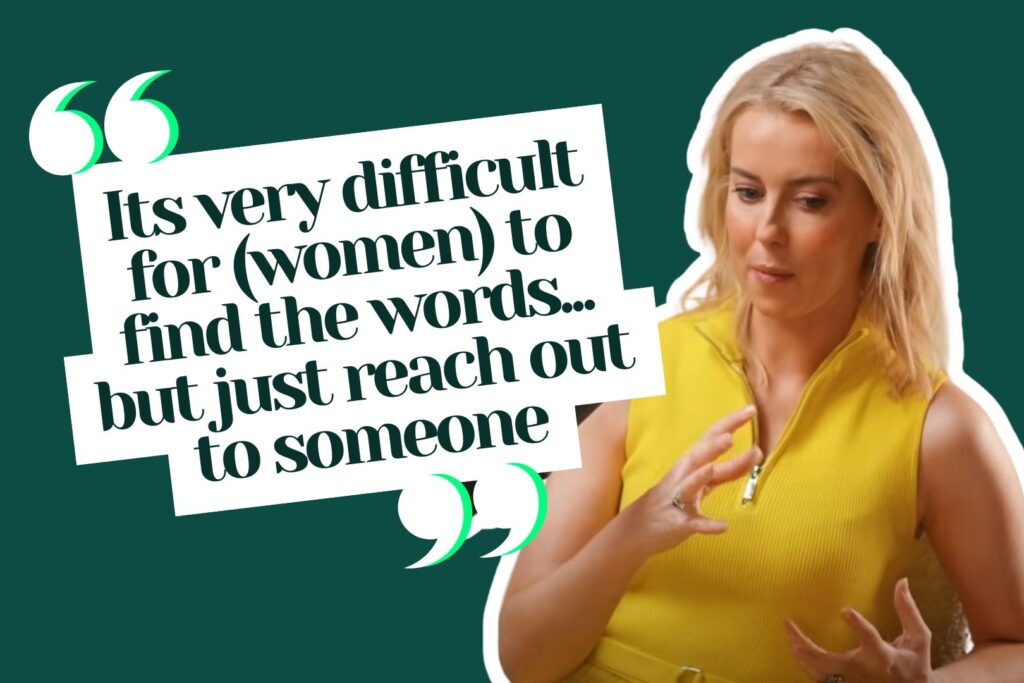
“It’s lovely to be in that position where we can shed some light on a difficult history and the very difficult times that patients have had before. But going forward, if they can’t find the words. If they’ve had a catastrophic row with a sister or a loved one, and they just can’t find a way of healing those bridges, or if they’ve had a complete breakdown in work and they can’t find the words to go back, link them to [Dr Louise Newson] podcast and maybe something will resonate, and they might be able to reconnect those relationships.”
Blackwater Private Clinic provides two of the five Menopause Clinics in Northern Ireland. We also supply female testosterone privately from our clinics.
To book into our accredited British Menopause Society Clinics with our Specialist Menopause Doctors just head to our page.

Watch or listen to the full discussion with Dr Fionnuala on Dr Louise Newson Podcast
YouTube channel: https://www.youtube.com/@menopause_doctor
Spotify Link: https://open.spotify.com/episode/0hAqTScqkUeKKAta8GNXcW?si=qW10X0JuS7CxcsJCKLk3WA